 Water
Water Water
***** find spot for this
Even if I had a Birkey water filter I would still construct a emergency water filter if I needed to run dirty lake or stream water through. The Birkey has a great water filtration capacity, but the more garbage you dump into it, the shorter the filter will last. Running an initial cleaning pass though a home made filter should get rid of most impurities. *******
The general consensus is you can survive 3 days without water, so it should be at the very top of everyone's list of things to prepare for.
While you can in fact survive 3 days without water (and maybe even a little longer), your brain and organs are going to be in the process of shutting down. You will be irritable, experiencing terrible headaches and finding it hard time concentrate on even simple things. You joints will ache. Not the best position to be in when involved in a SHTF event.
 Never let it get this far.
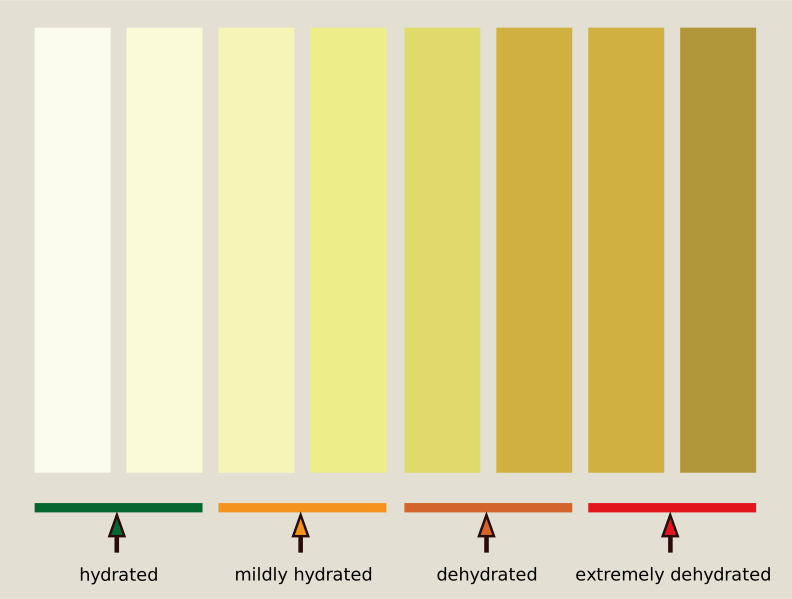
Your best indication of being dehydrated is your urine color. Here is a chart.
If you hit the right hand color the U.S. army suggestion is to get medical attention as you may have blood in your urine or your kidneys are shutting down.
If you are unprepared and a disaster strikes, check out our Emergency Water page. If things last longer than a day or so, you might want to try DIY Emergency Water Filtration. Not the ideal choice, but it should keep you alive until help comes.
Plan on storing 4 liters (1 gallon) of water per person per day.
Females need a little less, and children even less but this should give you some wiggle room if you need to exercise or wash something. Plus you won't have to recalculate your kids every year. This works as long as you are staying home, or bugging out in a car. If you have to walk cut younger kids water in half. You won't be able to carry it all.
When storing water don't focus on getting the biggest containers. Get a mixture of small handheld bottles, larger 1 liter bottles, a few larger containers and some type of water filtration system. If you are forced to bug out you won't be able to drag your rain barrels with you.
Kids can carry their own small water bottles that can be refilled from one liter bottles.
A portable water filtration system can filter much more than you could ever carry, and doesn't cost or weigh much. Consider adding one to your supplies.
Level 0 (3 days)
4 liters X 3 days X 4 people= 48 liters. (13 Gallons)
Level 1 (3 weeks)
4 liters X 21 days X 4 people= 336 liters. (89 Gallons)
Level 2 (3 months)
4 liters X 90 days X 4 people = 1440 liters (380 Gallons)
(almost 6 rain barrels full)
Level 3 (Indefinite)
There is a limit to water storage. If you are planning on lasting more than 3 months, you are going to need a way to refill your waters supply.
Harvesting rainwater from gutters might work for an urban environment, as long as you have enough storage to get you through dry spells.
If you live in the country, a well, or access to a on site river would be the best bets, but have a way to filter the water incase it becomes contaminated.
Larger scale, look into permaculture. They have a variety of great water harvesting methods.