 Farm&Garden > SoilAmendment > Ruth Stout
 Ruth Stout
Quick Synopsys: I still had rock hard clay soil after a year. Might have worked better if I dug in organic matter the first year, then mulched. Will try again
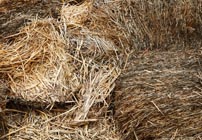
A google search will tell you all you need to know about the Ruth Stout gardening method, but the basics are using hay (and pretty much any organic matter such as food scraps) as mulch for your garden.
No need to dig in organic matter to the garden every year, the local bug, worm and bacteria populations will handle it for you as they do in nature.
Year 1
This gardening method was very appealing to me, so I tried it on my main garden the first year. In a SHTF situation you might not be able to get hay, but leaves are in abundance and free at the end of every year. Just make sure you collect and store them when available. Grass clippings are also in abundance spring, summer and fall. Just make sure you dry them before putting them on your garden or they will turn into a gloppy mess.
These leaves, grass clippings and food scraps are used to to fertilize the life in your soil, which in turn feeds your plants. This avoids having to use any processed fertilizers from the store, which are terrible for the soil long term and will be unavailable during SHTF.
I didn't start out with soil so much as solid clay. It had almost no organic matter in it, so I was excited to give it a try from this starting point.
The first year seemed to go will, with the grey clay turning a rich brown under the mulch. It seemed to hold water much better than exposed soils.
There was a huge mix of bugs, with pill bugs, centipedes, and millipeds in abundance, all tearing down the organic matter. I was surprised how often I had to add the mulch materials to the top to keep up a nice layer. They just seemed to fall into the garden.
Over the winter I kept a 1-2 foot layer layer of leaves and grass clippings over the garden. (stolen from all my neighbors who put them out on pickup day).
During the spring I decided to install some perennials into this garden plot, and pulled back the mulch to dig them in.
The entire garden was rock hard. So much so, I had trouble digging into it with a shovel and had to switch to a pitch fork to break it up.
When I examined the clods of dirt, there was many examples of worm tunnels throughout, but it didn't seem to contain any more organic matter than when I started.
When I watered the garden, it wouldn't penetrate very far, and would pool and run off. When I dug up the soil it hardly penetrated at all.
My guess is I should have dug in a ton of organic matter as deep as I could before covering it with mulch, then used the bugs and bacteria to keep the already healthy soil fed.
I am in the process of doing so now and will be interested in seeing the results.
Long term, or large scale this might not be a viable solution though. Small garden plots are easy to cover, but scaling it up to feed a small village, it might be hard to find enough organic matter to keep the ground covered. You can't go out and buy hay like Ruth could, and there won't be any large lawns that need mowing or raking for leaves.
It seems like it might work in the city, on a single family scale though, so I'll give it another go.
Just as a heads up, it's looking like green mulch from the Soil Food Web people is looking like the best long term solution for feeding the garden in any situation.
Keywords: Gardening, Fertilizer,Compost