 Farm&Garden > SoilAmendment > Compost > winterCompost
Winter Compost
-in practice it was too much work for too little result.
-got tons of huge worms at the end of winter though.
- Might be best to set up a hot compost at the end of summer, then cover and leave. Maybe add some red wigglers
- try digging a hole for the compost. This would keep it warmer during winter, hopefully keeping worms working all winter?
Every year there are hundreds of bags of leaves dutifully raked up and placed on curbs for the city to pick up.
Then once spring rolls around we many of us head to the big box stores to get some crappy compost to amend our gardens and lawns.
This is madness.
Time for another experiment. The British have been winter composting for years, but can we do it here in Canada, where it's so much colder?
Last fall under the cover of dark, I grabbed all the leaf bags from around my block. I dumped as many as I could onto my garden as a mulch layer and stored the rest on at a secluded spot on the side of my house. Even if winter composting doesn't work I will have a lots of mulch come spring.
In October I dumped 5 bags of leaves into my garden in a big pile. The bigger the pile you can make the more heat will be retained. A minimum of 1 meter squared is best. I sprayed the pile with water as I turned them over, making sure it's all damp. Then I mixed in a much grass clippings, vegetable waste and coffee grounds as I had.
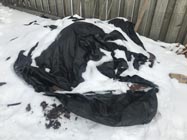
Finally I covered it all with a black tarp I got from Canadian Tire. I am doing my best to get all plastic out of my garden, but I didn't have time to find burlap and dye it black. (baby steps).
Every week or so I fill up a bucket of hot water, coffee grounds, Bokashi Juice, and whatever vegie scraps I can find. I grind them all up and pour it on the pile as I turn it. There also may be a 6 year old peeing in the bucket whenever he can.
I had two buckets of Bokashi 'ripen' in the last 2 months, so I added them as well.
The hot water physically warms the pile. The smaller ground up nitrogen pieces quickly feed the bacteria which further warms it. And finally the black tarp absorbs the heat of the sun and further warms the pile. When I remove the tarp and start turning the pile before adding the water, you can clearly see steam coming from the pile.
The only real maintenance is if it snows more than the sun hitting the tarp can melt I need to go sweep it off. This doesn't really happen that often though.
We are never going to hit hot compost temperature, but I don't really need to. I haven't added anything with pathogens that need killing, and am in no particular rush. I can't use it before spring anyways.
Like most soil amendment strategies this wouldn't really be something to start during a SHTF situation, but by collecting the leaves as they are available and keeping a constant supply of good quality compost to your garden you are ensuring your garden will be ready when you need it.
In my research, feeding your garden is about feeding your soil. It's not about adding store bought commercial fertilizer to the garden, but creating a healthy soil ecosystem. The more life we can get into the soils now, the more they will be able to support us later.
It feels like this would hold true for both a backyard garden, as well as some kind of bug out retreat, or extended community. Nourish the soil before hand and reap the rewards when times get tough.
An optional idea I might explore next time is adding bin of red wigglers to the pile once it has composed enough. The middle of the pile seems to stay around 15-21 degrees even in the early mornings after a brutal cold outside. I think they would speed up the compost time, while enhancing the quality. You could also scoop some of the half decomposed leaves into worm bins for bedding.
I go back and forth on this idea. Releasing potentially invasive species into the wild is not usually a good idea, but from what I can tell they will die out next winter without another pile... but is this a more palatable thought? I like my little wormies. Edible Acres has an interesting chicken system where they have a leaf layer deep enough to keep red wigglers alive over winter. They not only add fertility to the compost, but they feed the chickens as well.